A child's behavior is shaped by the intersection of their environments, home, school, peers, and digital worlds. When a child acts out in one setting but is calm in another, they aren't being manipulative; they are exquisitely sensitive to context
A child's behavior is shaped by the intersection of their environments, home, school, peers, and digital worlds. When a child acts out in one setting but is calm in another, they aren't being manipulative; they are exquisitely sensitive to context, adapting to the different expectations, stresses, and emotional temperatures of those distinct spaces.
You've raised your two children the same way. Same home, same rules, same values. And yet they are remarkably different people. One thrives in groups, one prefers to be alone. One absorbs stress and shuts down, the other seems impervious to it. You wonder what you did differently.
The answer, more often than parents expect, is: not much. Because children are not shaped by parenting alone. They are shaped by everything, the neighbourhood, the school, the friendships, the cultural messages they absorb, the digital environments they inhabit, the mood of the household on a given Tuesday afternoon. All of it lands.
The Layers That Shape Every Child
Think of a child's world as a series of circles moving outward. The innermost circle is family, the most powerful shaper of a child's early behaviour and beliefs. But just outside that is school, friends, and the daily environments they move through. Further out are the broader forces, culture, media, the economy, the values of the society they're growing up in.
These circles don't operate independently. They interact. Tension between any two of them lands on the child. When home and school feel aligned, when the values, the expectations, the emotional tone rhyme, children feel stable and secure. When they feel at odds, children carry that dissonance in their bodies, often without words for what they're feeling.
A child doesn't exist inside a single environment. They exist at the intersection of all of them, and every one of those environments is leaving a mark.
Why the Same Child Behaves Differently in Different Rooms
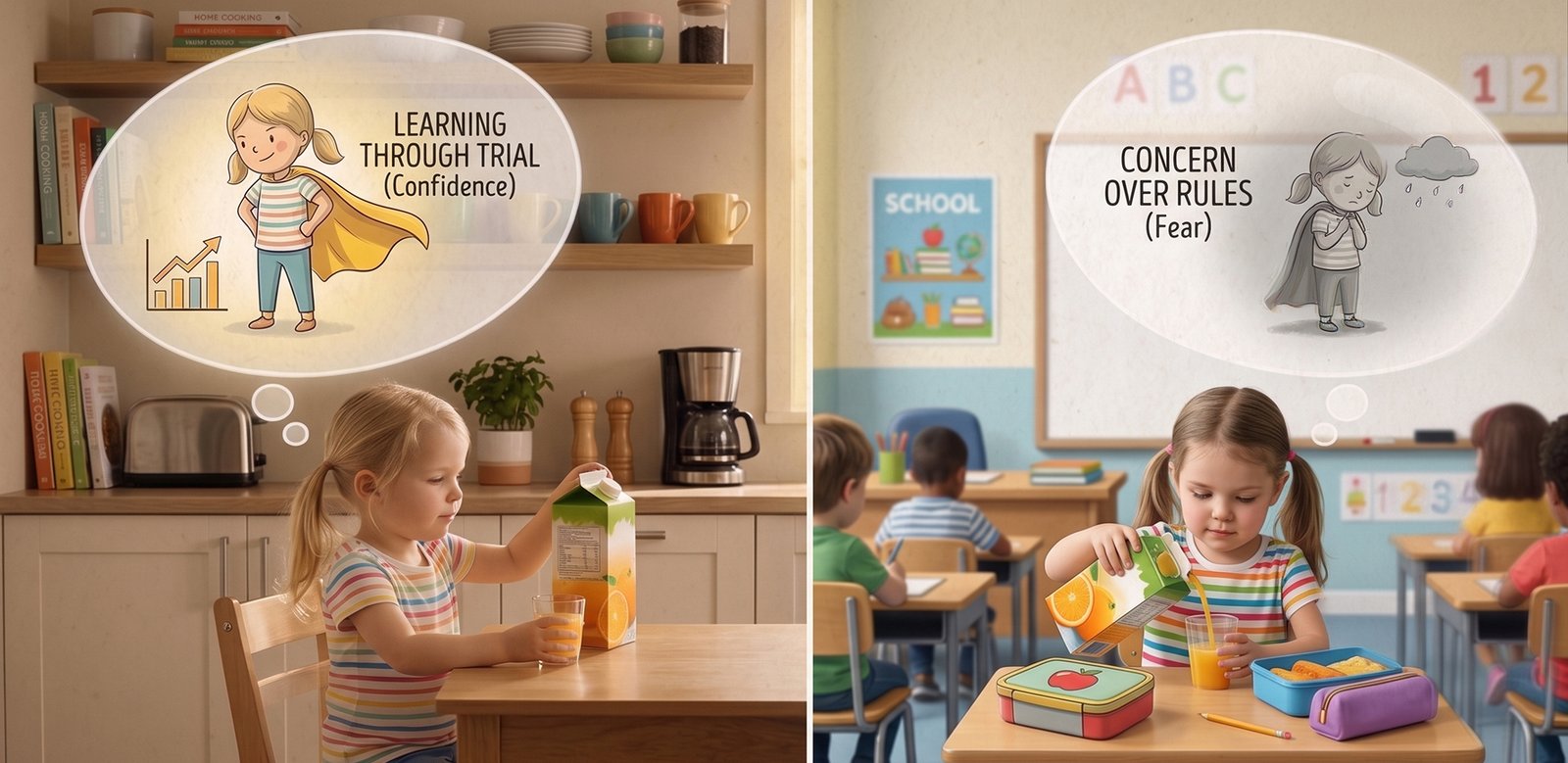
The child who is calm and focused at home can be chaotic at school. The child who struggles to sit still in class can play independently for hours at home. The child who is kind to their friends can be cruel to their sibling. This is not inconsistency or manipulation, it is the natural result of a child who is shaped by context.
Different environments have different expectations, different emotional temperatures, different relationships. And children, particularly young children, are exquisitely sensitive to these differences. They read rooms. They adapt. Sometimes what looks like a behaviour problem is actually a signal that one of their environments isn't working for them.
A MOMENT YOU MIGHT RECOGNISE
Your child's teacher says they are shy, reluctant to participate, hard to draw out. You are baffled, at home, this child doesn't stop talking. They perform, they lead, they fill every room with noise. Two very different readings of the same child, and both completely accurate, in their context.
What Happens When Environments Conflict
Children are not equipped to manage conflict between the adults and worlds they depend on. When parents and teachers disagree, when home values and peer values diverge sharply, when the digital environment a child inhabits sends signals that contradict what they're taught at home, the weight of that conflict lands on the child.
This doesn't mean conflict can always be avoided. It means that when it exists, children need adults to help them make sense of it, rather than leaving them to absorb and interpret it alone.
The Digital Environment Is Now One of the Circles
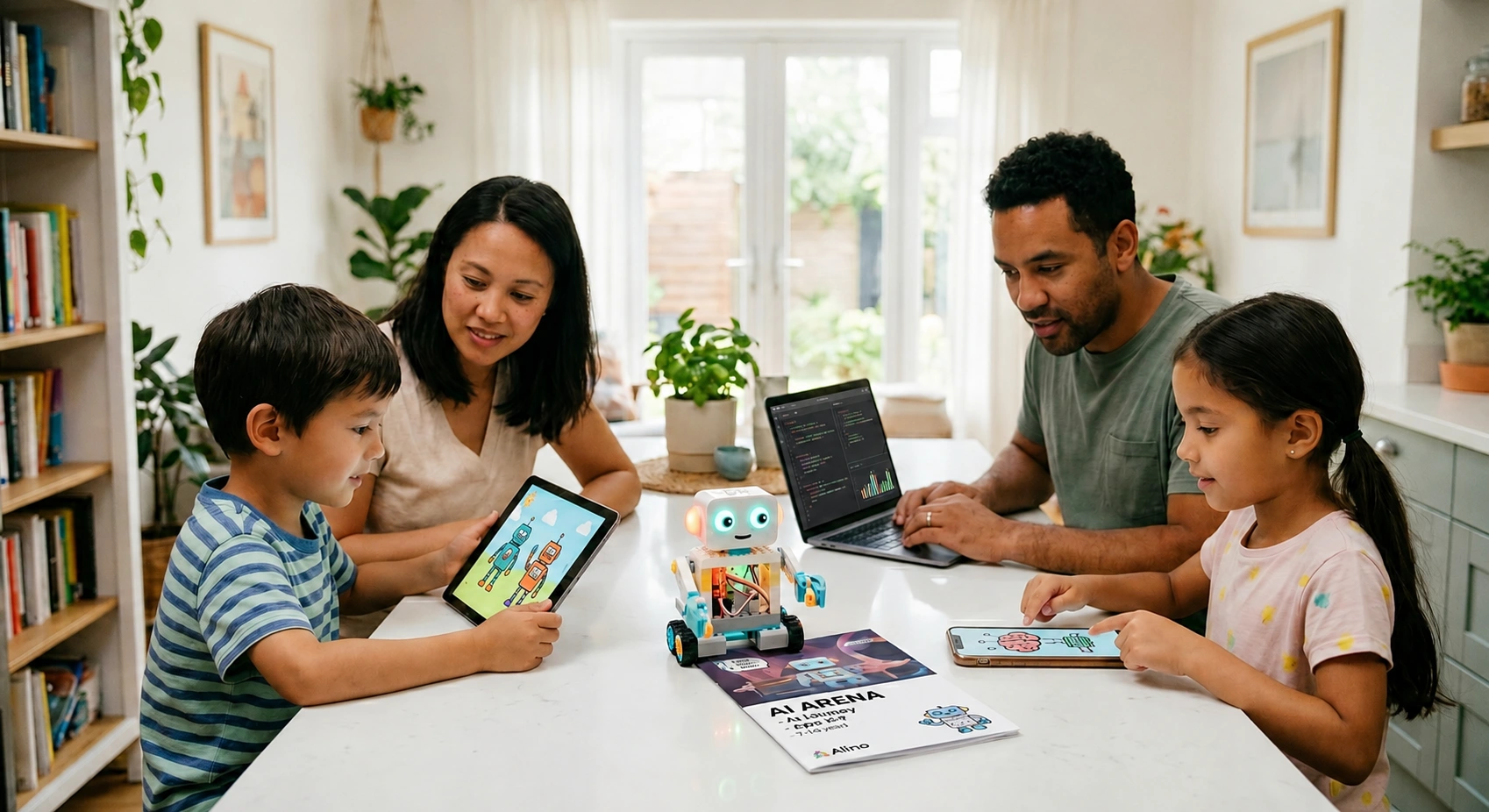
For children growing up today, the screen environment has become one of the most influential circles in their world, often before they start school. What that environment values, what it rewards, what it shows as normal: all of it shapes the child just as powerfully as the home or classroom does. The question for parents is not whether digital environments will influence their child, but which ones, and how.
A THOUGHT FOR PARENTS
When you can see your child's world more clearly, you can shape it more intentionally.
Aiino's Parental Intelligence gives you a window into your child's digital environment, what they're exploring, how they're engaging, where their curiosity is going. Not to control, but to understand. Because parents who understand their child's full world are better placed to connect the dots, notice what's not working, and be present in the ways that actually matter.
Explore Parental Intelligence at aiino.ai
You cannot control every environment your child moves through. But you can understand them. And a parent who understands the full picture of their child's world, not just the parts they can see, is already doing something most parents never quite manage.