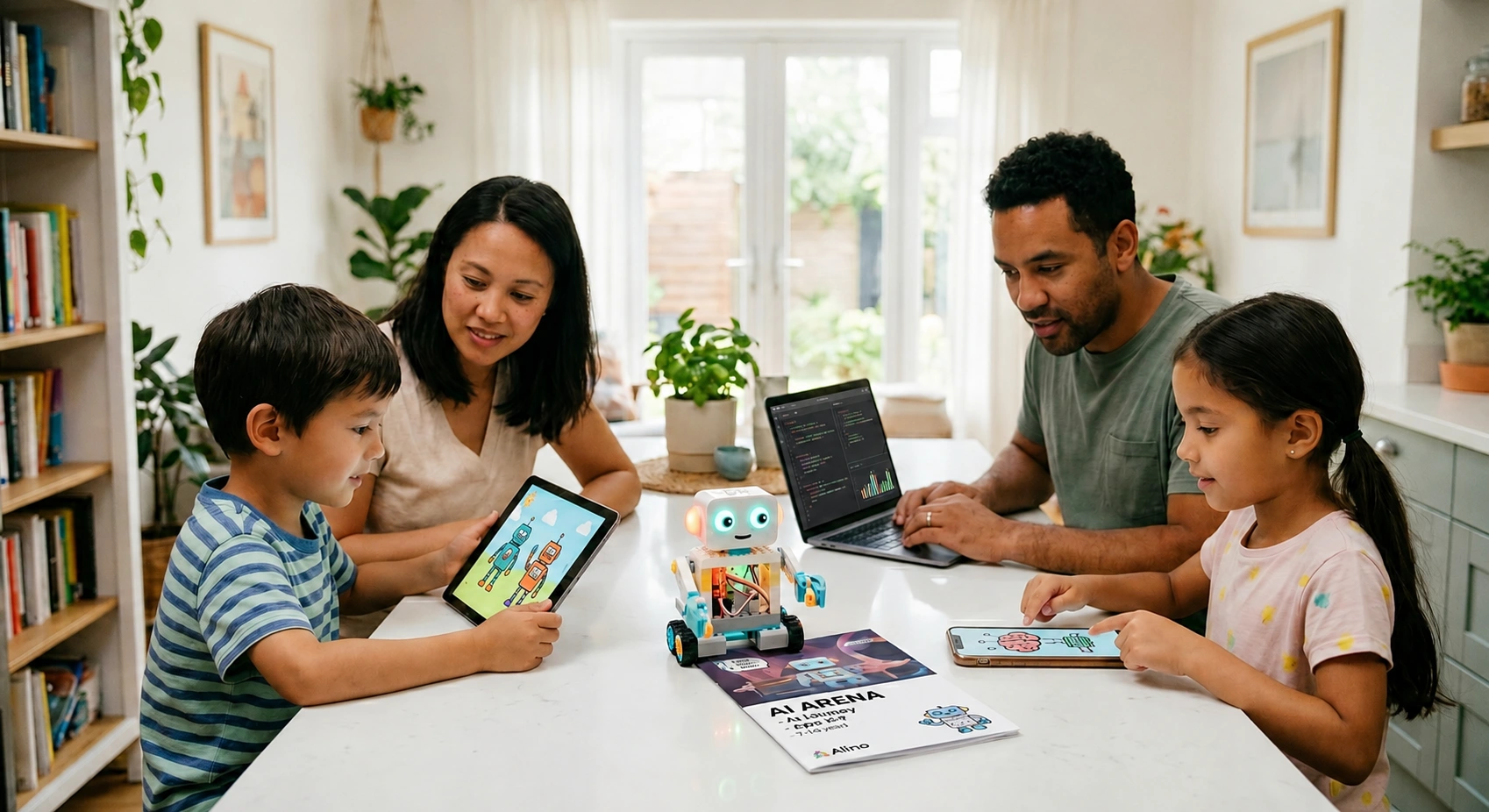
When a child shapes a story making choices that determine what happens next they are doing something cognitively more demanding than listening to a story. They are predicting, deciding, and taking responsibility for outcomes.
Quick Answer
When a child shapes a story making choices that determine what happens next, asking questions that change the narrative direction, deciding how a character responds they are doing something cognitively more demanding than listening to a story. They are predicting, deciding, imagining consequences, and taking responsibility for outcomes. This active engagement produces significantly better comprehension, retention, and emotional understanding than passive reception of the same narrative content.
Two children hear the same story. One listens. The other gets to decide, at a key moment, which path the character takes. One receives the narrative. The other shapes it. A week later, ask both children what happened in the story. The child who shaped it will remember more. Ask them why a character made a particular choice. The child who shaped it will have an opinion. Ask them how the character felt. The child who shaped it will answer from the inside.
The difference is not accidental. It is the product of a specific type of cognitive engagement that shaping a story requires and that listening to one does not.
What happens cognitively when a child shapes a story
Active prediction: every choice point in an interactive story requires the child to predict what will happen next. "If the character goes through the forest, what might they encounter?" This prediction is not passive it requires the child to draw on their understanding of the story world, the character's traits, and the logic of narratives. The act of predicting activates memory and comprehension in ways that simply receiving the next plot development does not.
Causal reasoning: every choice has consequences in an interactive story. The child who chose to have the character go through the forest rather than around it encounters the consequences of that choice. This causeand-effect experience - I made a choice, the story changed, here is what happened - builds causal reasoning skills that transfer directly to how children think about real-world decisions.
Perspective-taking: when a child makes choices for a character, they inhabit that character's perspective more fully than when they observe the character. "What would I do if I were in this situation?" is a perspective-taking exercise that is central to empathy development. The interactive story provides a structured, low-stakes context for practising this perspective shift repeatedly.
Narrative structure understanding: children who shape stories develop a deeper intuitive understanding of how narratives work - that stories have tension and resolution, that character choices drive plot, that consequences matter, that the ending is connected to the choices made along the way. This narrative intelligence is the cognitive foundation of both reading comprehension and creative writing.
"The child who shapes the story is not just being entertained by narrative. They are learning how narrative works - from the inside, as a maker of it rather than a receiver. That is a completely different cognitive experience with completely different developmental outcomes."
What listening to a story builds - and what it does not
Listening to stories builds vocabulary, language exposure, narrative familiarity, and the pleasure of story that motivates future reading. These are genuine and important developmental benefits. The parent who reads to their child every night is doing something valuable that the parent who does not is missing.
What listening does not build as effectively: the active prediction and causal reasoning that come from having skin in the game. The perspective-taking depth that comes from inhabiting rather than observing a character. The narrative structure understanding that comes from having made structural choices. These require participation, not just reception.
The most powerful reading and storytelling environment for children combines both: the pleasure of hearing stories told well, and the agency of shaping what happens. Interactive stories are not a replacement for read-aloud. They are the participatory complement that builds what read-aloud cannot.
What this looks like in practice
The child who has been shaping interactive stories develops visible differences in how they engage with all narratives. They ask more questions. They make more predictions. They offer opinions about character choices rather than simply accepting them. They notice when a story's logic is inconsistent - when a character does something that does not match what they seemed like before. They have, through practice, developed narrative intelligence that passive story consumption does not produce.
THE CONVERSATION AFTER
Your seven-year-old has just completed an interactive story where they chose to have the character tell the truth even though it was hard. At dinner, they say unprompted: "I think the character was scared but they did the right thing anyway. I think I would have done the same." They are discussing a fictional character's moral choice as if it were a real one - because the choice was theirs. They made it. They own the moral reasoning that went into it. That transfer from fiction to real-world thinking is what interactive stories produce that passive stories do not.
INTERACTIVE STORIES — AIINO
Aiino's Interactive Stories put the child in the authoring seat - every choice matters and changes what happens next.
Interactive Stories on Aiino are built around meaningful choices that produce genuinely different narrative paths. The AI responds to the child's specific decisions, following the logic of the story world while adapting to what the child chose. The child is not choosing between pre-packaged endings - they are shaping a narrative that responds to them specifically. Free to explore at aiino.ai.
Explore Interactive Stories free at aiino.ai