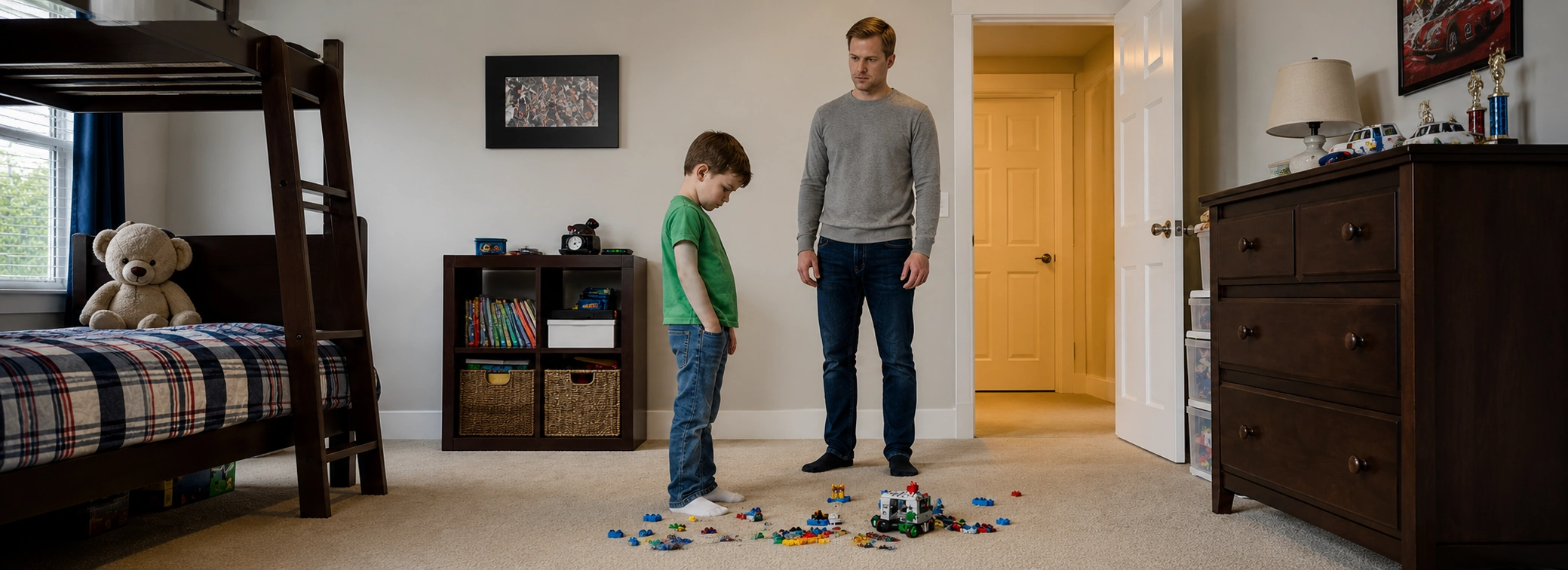
Quick Answer
Between ages three and nine, kids use play, endless questions, and imitation to actively construct their identity and map out social roles. Pretending to be an animal, obsessing over fairness, or questioning gender norms isn’t a quirky phase. It is high-level cognitive work where they are safely testing who they are and where they fit in the world.
Your four-year-old announces that they are a cat. not that they want to pretend to be a cat. That they are one. They would like to be addressed accordingly. They eat from a bowl on the floor. This lasts for three weeks.
Or your seven-year-old becomes intensely preoccupied with fairness: who got more, who went first, who has the better role in the game. Or they start asking big, sudden questions: Why do boys and girls have different clothes? Why does everyone have to get a job? What was I like before I was born?
These aren’t random phases. They are the visible signs of inner work that is some of the most important of a kid’s life: working out who they are, where they fit, and what it means to be the kind of person they are becoming.
The Years When Identity First Takes Shape
Between ages three and five, kids become acutely aware that they have a self, a continuous, persistent identity that goes to sleep and wakes up and is still the same person. This discovery is enormous. And it immediately raises a set of fascinating questions: What kind of self am I? What am I allowed to be? What do people like me do?
Play becomes the primary laboratory for exploring these questions. Kids this age try on identities constantly: through role play, through character, through dress-up, through insisting they are a different creature entirely. This is not confusion. It is one of the most sophisticated cognitive activities available to a three-year-old.
When a kid plays pretend. They are not escaping reality. They are rehearsing it, trying out versions of themselves in a space where the stakes are low and the possibilities are unlimited.
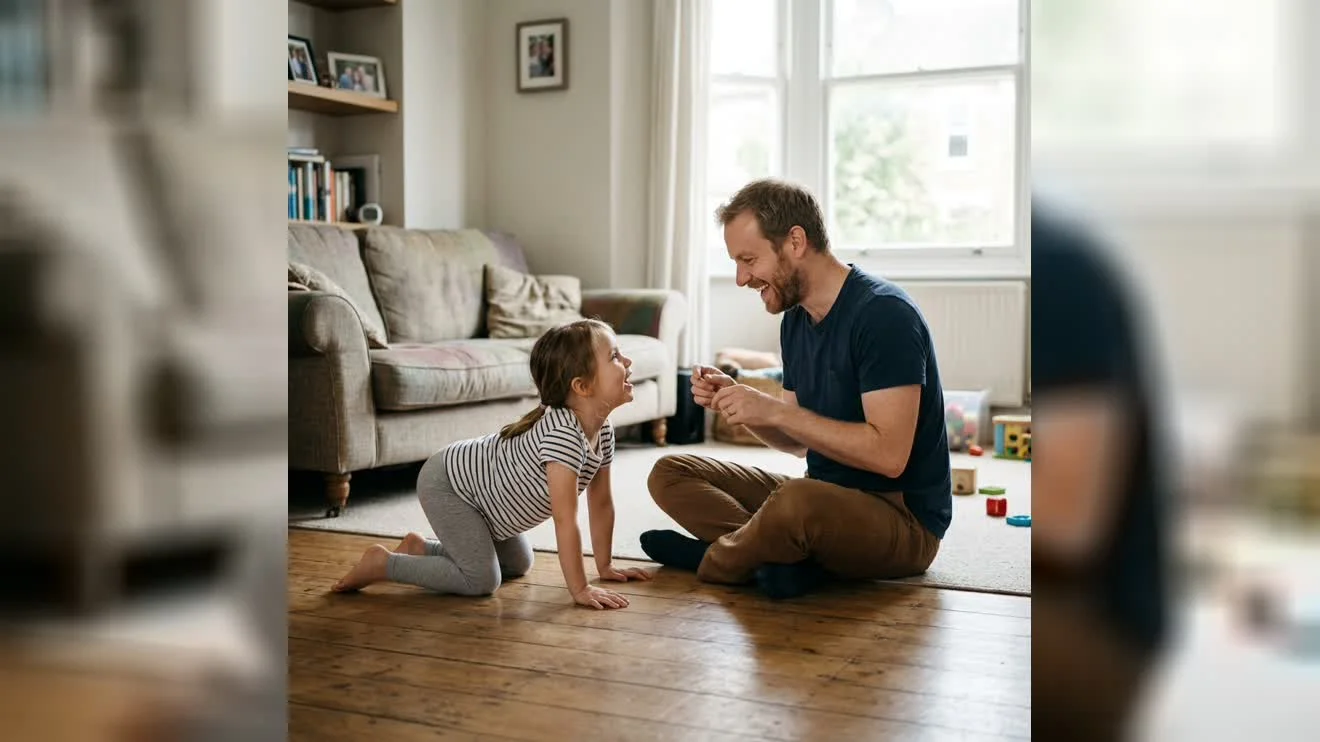 Play becomes the primary laboratory for exploring these questions. Kids try on identities constantly.
The Questions They’re Asking Without Words
Around ages five and six, kids begin noticing difference: between themselves and others, between groups, between roles. They notice that some things seem to belong to certain kinds of people. That certain behaviours get approval and others don’t. That the world appears to have an order, even if they can’t yet name it.
Their questions at this stage can be startling in their directness. Why can’t boys wear dresses? Why do some people have more than others? Why did that person get more attention? These are not provocations. They are a kid genuinely trying to map the social world. The quality of the answers they receive at this stage shapes the assumptions they carry forward.
A MOMENT YOU MIGHT RECOGNISE
Your five-year-old tells you firmly that only girls can be nurses. You ask where they heard that. They don’t know. They absorbed it, from a book, a comment, a pattern they noticed in the world. Kids at this age are building a model of how things are. The model can be updated. But it requires someone engaging with it directly.
Help Shape the Future of Active Learning
Join our exclusive Founding Member program. Get early access to new interactive modules, direct input into our product roadmap, and lifetime pricing options.
Why the Six-to-Nine Window Matters for Self-Concept
Between six and nine, kids begin comparing themselves to peers in earnest, not just noticing differences, but drawing conclusions about their own worth from them. Am I clever? Am I likeable? Am I good at things? These questions are alive in a kid who is watching how they stack up, and every piece of evidence, a praise, a criticism, a comparison, goes into the picture they’re building of themselves.
The self-concept that solidifies in this window has remarkable staying power. Kids who leave this stage with a generally positive, stable sense of who they are and what they’re good at carry that forward. Those who leave it with significant self-doubt carry that too. The adults in this window are not bystanders. They are co-authors.
The Power of Stories in Identity Formation
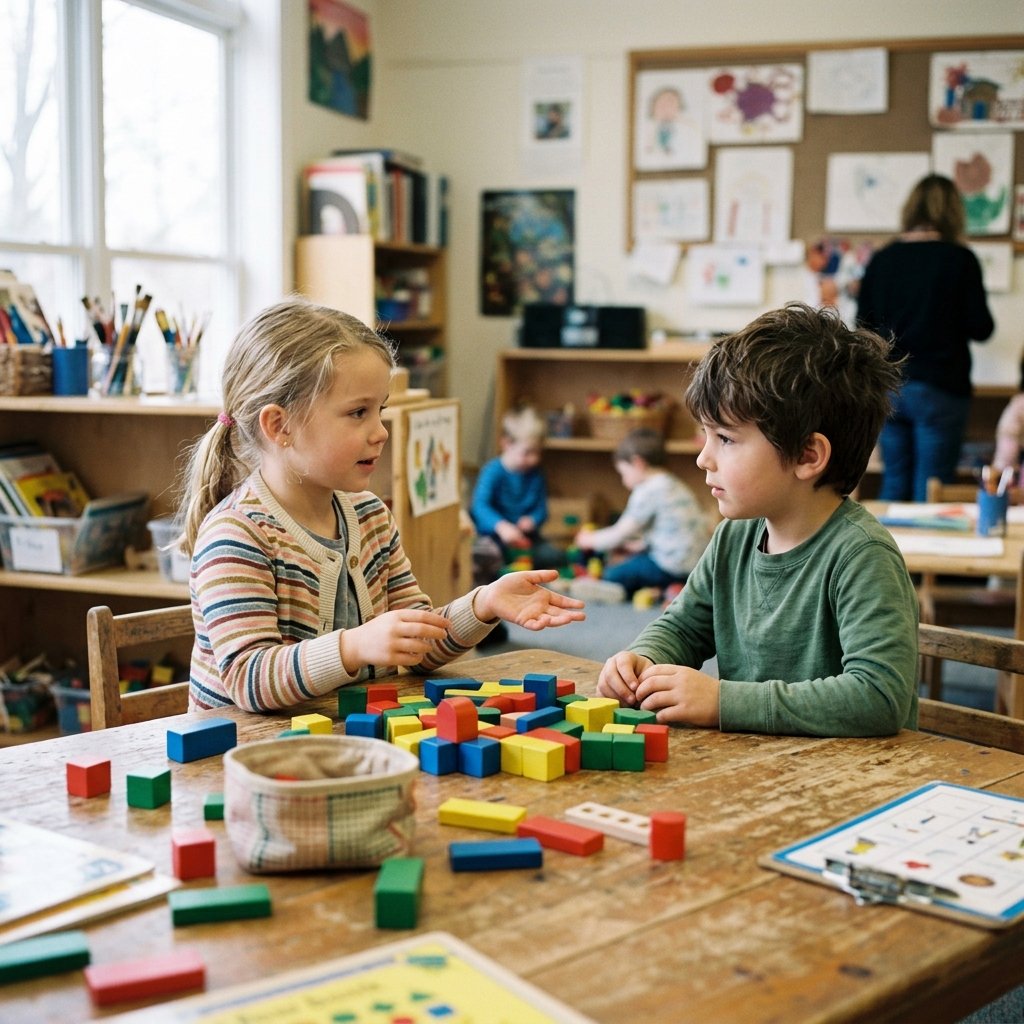
Stories are one of the primary ways kids have always explored questions of identity, safely, with distance, with the freedom to try on different responses to different situations. A character who faces a fear and overcomes it gives a kid a template. A story that shows a kid like them making a good decision plants a possibility. The characters kids love and identify with are not just entertainment. They are identity material.
Is Your Kid's Screen Time Active or Passive?
Most screens capture a kid's attention without checking their understanding. Take our 2-minute diagnostic quiz to evaluate your kid's digital patterns, identify autoplay traps, and receive actionable insights to maximize active learning.
Start Screen Time & AI QuizThis is why the stories in a kid’s life matter: not just for the values they convey explicitly, but for the versions of themselves they make available. A kid who sees characters that look like them, think like them, face the kinds of challenges they face, and who get to be brave and curious and capable, has more to build their identity from.

Research Citations
- [1]Kids’s self-concept develops from concrete, physical self-descriptions toward an abstract, evaluative, trait-based understanding of who they are (Harter, The Construction of the Self, 2nd ed., 2012). Guilford Press. View source →
- [2]Kids begin using social comparison with peers to form lasting self-evaluations at roughly seven to nine years of age (review of self-development). Developmental Cognitive Neuroscience (NIH/PMC). View source →
- [3]Identity, self-concept, and self-esteem change markedly in middle childhood as kids engage in social comparison and self-projection across different audiences. OpenStax, Lifespan Development. View source →
- [4]Pretend and sociodramatic play is positively associated with social competence in early childhood (meta-analysis, 2024). Educational Psychology Review. View source →
- [5]Role-play and pretend play let kids rehearse social roles and try on different versions of themselves in a low-stakes space. Kid Mind Institute. View source →
FOR PARENTS
The stories a kid lives inside shape the person they’re becoming.
Aiino’s Interactive Stories aren’t passive. Kids talk to characters, ask questions, shape the direction of the narrative. They get to be curious, brave, and capable, in a story that responds to them. At an age when identity is being actively constructed, giving a kid stories where they are an agent rather than an audience is one of the most developmentally powerful things a screen can offer.