
The most important skills children will need in an AI-dominated world aren't technical — they're deeply human. Here's how to cultivate them.
Most parents worry about whether their child needs coding skills to survive in an AI world. But the biggest research report on the future of work — published by the World Economic Forum in 2025 — found something different. The skills growing fastest in value are deeply human ones: creative thinking, empathy, resilience, and the ability to think about right and wrong. These are skills AI cannot replicate. They are becoming more valuable, not less, as AI takes over more routine work. The question for parents is not whether to prepare children for an AI world. It is which human skills to build — and how.
There is a fear that runs underneath a lot of parent conversations about AI right now. It sounds like this: "If AI can do everything, what is left for my child?"
It is a fair question. AI is already writing first drafts of documents, analyzing data, writing code, translating languages, and doing much of the thinking-based work that used to require years of education. And it is getting better very fast. The children starting school today will enter a job market that looks nothing like the one their parents entered.
But the fear is based on a wrong assumption. AI is not going to replace human ability across the board. What the evidence shows is more specific: AI is replacing certain types of tasks, while making certain types of human skill more valuable than they have ever been before.
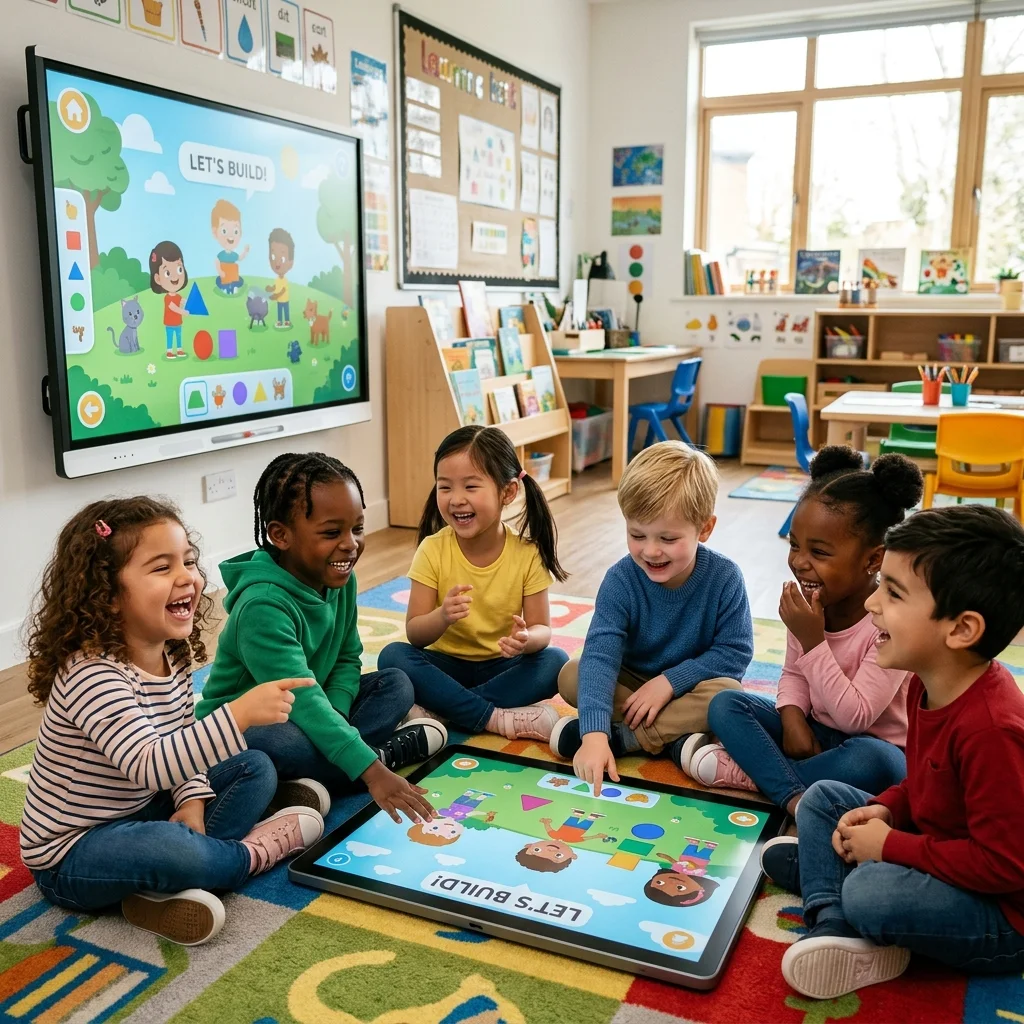 Exploring key concepts of Raising Future-Ready Children with AI and Human Values.
So the right question for parents is not "will AI take my child's job?" The right question is "which human skills are becoming more valuable because of AI — and how do I help my child build them?"
What the Research Says About Skills AI Cannot Replace
The World Economic Forum publishes a major report called the Future of Jobs Report. It surveys over a thousand companies across 55 countries to find out which skills are becoming most valuable in the workforce. The 2025 edition found something that surprised a lot of people.
Creative thinking ranked fourth in the list of most valued skills — above many technical abilities. Resilience ranked second. The ability to lead and influence others ranked third. Empathy and active listening appeared in the top ten skills that AI is least able to replace [1].
The pattern is clear. The skills growing fastest in value are the ones that require human judgment, human connection, and the ability to make meaning from situations. Not because these are the leftovers after AI takes everything else. Because these skills become more valuable the more AI handles the routine work — the same way that managing people became more valuable as machines took over factory work.
“The most valuable people will be those who combine technical ability with human skills like leadership, communication, and the ability to think critically. Technical skills are necessary but not enough on their own.”
— World Economic Forum, Future of Jobs Report 2025
The children who will do well are not the most technically skilled ones. They are the ones who can use AI tools with reasonable confidence while also bringing the judgment, creativity, empathy, and moral reasoning that those tools simply cannot produce.
 Active learning and engagement helps children master new skills.
Why Empathy Is Now a Career Skill — Not Just a Nice Quality
Empathy has always been seen as a good quality to have. Something that makes a person kind. Something that matters in relationships. That is all true — and it is only part of the picture now. Empathy has become one of the most important career skills a person can have. Understanding why changes how parents think about building it in their children.
Here is why. AI systems can process huge amounts of information about human behavior and produce responses that seem empathic. They can say the right things, adjust their tone, and appear to understand. But they cannot do what empathy actually requires: genuinely understand what another person is going through, combine that understanding with real moral judgment, and act from a place of genuine care rather than pattern matching.
In a world where AI handles more and more information processing, the jobs that stay human are the ones that need real human understanding. Healthcare. Teaching. Leadership. Counseling. Negotiation. Design for real human needs. All of these require genuine empathy. Research published in 2025 in the journal Informatics in Education confirmed what practitioners have seen for years: "Human teachers still surpass AI in empathy and the kind of deep understanding that early learning depends on." [2]
Is Your Child's Screen Time Active or Passive?
Most screens capture a child's attention without checking their understanding. Take our 2-minute diagnostic quiz to evaluate your child's digital patterns, identify autoplay traps, and receive actionable insights to maximize active learning.
Start Screen Time & AI QuizEmpathy does not develop through being told to be empathic. It grows through experience — specifically through situations where a child has to figure out what another person is feeling and why. Reading stories with morally complex characters. Working through genuine friendship difficulties. Being in situations where another person's perspective matters. These experiences, built up across childhood, create the brain's ability to understand other people deeply. They cannot be shortcut. But they can be supported.
WHAT THIS LOOKS LIKE AT HOME
A child comes home upset because a friend chose someone else for their team. The instinct most parents have is to fix the feeling fast — "you will make other friends" or "they were not being kind." The more useful response is harder: "What do you think was going on for them when they made that choice?" Not to excuse the behaviour. To build the habit of wondering about what another person's experience might be. That question, practiced across hundreds of small everyday moments, builds genuine empathy.
Creative Thinking — What It Really Means and How It Grows
Creative thinking is one of the most misunderstood skills on the list of things AI cannot replace. Most people assume it means being good at art — drawing, music, writing stories. Those are ways creativity shows up. They are not what the research means when it identifies creative thinking as one of the highest-value human skills in an AI world.
What the research means is something more basic and more powerful: the ability to make original connections between ideas, to come at a problem from an angle nobody has tried before, to put things together in a new way that produces something genuinely useful. This is what AI cannot do. AI can recombine existing patterns at extraordinary speed and enormous scale. It cannot originate. It cannot make the kind of leap that comes from genuine curiosity, from personal experience, from the specific way one human mind works.
Oxford University researchers published a paper in Nature Machine Intelligence in 2024 showing that children's specific needs and development are almost entirely missing from how we think about AI design and AI ethics [3]. The same gap exists in how we think about building creativity. We plan for adult workers without asking what it looks like to build creative thinking in a seven-year-old.
How creative thinking actually grows in children
Creative thinking in children grows mainly through two types of experience. The first is free exploration — genuine play, following curiosity, the freedom to pursue something without a predetermined right answer. The second is being challenged at the right level: not so easy there is nothing to think about, not so hard the child gives up. Together, freedom and appropriate challenge create the conditions where original thinking becomes possible.
The biggest threat to creative thinking in children is not AI. It is over-scheduling — having every hour filled with structured activities — and over-direction — always being told what to do next. Creativity needs space. It does not grow efficiently or on command. It grows in the gaps. The boring Tuesday afternoon where a child has to figure out what to do with themselves is not wasted time. It is exactly the kind of time where creative thinking is being built.
Ethical Reasoning — The Skill Most Schools Are Not Teaching
Ethical reasoning is the ability to notice when a situation involves right and wrong, to think through what different choices would mean for everyone involved, and to make a decision you can genuinely justify. It is one of the most important human skills for living in an AI world — and one of the least developed in most children's education.
This is not a theoretical concern. AI systems are already making real decisions that affect people's lives — who gets a job interview, who gets approved for a loan, what information people see online, how healthcare resources are shared out. These systems reflect the values of the people who built them. The people best placed to spot when those values are wrong, to push for different choices, and to build better systems are people who have genuinely developed the ability to reason about right and wrong.
A major review of AI in K-12 education published in 2024 found that while guidelines about AI ethics for adults have multiplied rapidly, developing this kind of thinking specifically in children and young people has been left far behind [4]. Children are the group most affected by AI systems in education. They are also the least prepared to understand or evaluate them.
Ethical reasoning does not develop through being told what is right. It grows through practice — through situations that present a genuinely difficult choice where there is no obvious answer, and where a child has to think through what matters and why. Stories are one of the most powerful ways to create this practice. A story where a character faces a truly hard choice — where different good values are pulling in different directions — invites the reader to use their own moral thinking in a way that no lecture can.
Resilience — The One Skill That Makes All Others Possible
Resilience is the ability to face something hard, find a way through it, and keep going. It shows up in every major skills framework as one of the most important human qualities for the years ahead. The WEF Future of Jobs Report 2025 places it second in its ranking of the core skills employers value most right now — and expects it to become even more important by 2030 [1].
The reason is straightforward. The world children are growing up into changes fast. Technology, the economy, and society are shifting at a pace that is genuinely new. The child who enters adulthood with strong resilience — who has a track record, built across childhood, of facing hard things and getting through them — is the child who can adapt when things change rather than being knocked over by it.
Resilience is not a personality type. It is not something you either have or you do not. It is a skill built through experience. Specifically, it is built through the repeated experience of facing something difficult, being supported while going through it, and coming out the other side. Not through being protected from hard things. Through being accompanied through them.
“The child who never faces difficulty does not build resilience. The child who faces difficulty with consistent support builds the capacity that will serve them across an entire life.”
— Harvard Center on the Developing Child
The parent's role in building resilience is specific. It is not to remove obstacles. It is to be consistently present when the child encounters them. To resist the urge to solve the problem for the child — and instead to stay close while the child discovers they can solve it themselves. This is harder than it sounds. It means sitting with your own discomfort while your child struggles. That discomfort is worth sitting with. What comes out the other side is a child who knows they can handle hard things.
What Parents Can Actually Do
The research is clear on one point that parents often underestimate. The relationship between a parent and child is the most powerful developmental environment available. More powerful than schools. More powerful than programs or structured activities. The quality of that relationship — the warmth, the attention, the consistency — shapes everything else. When a parent is genuinely curious about their child's inner life, they are building the relationship through which all real development happens.
This is not a call to be a perfect parent. It is a reorientation of where the investment goes. Small, regular moments of genuine connection matter more than big expensive interventions.
Simple things that build the skills that matter
Read fiction together and talk about what the characters decided. Not to find the right answer — to practice asking "what was she thinking?" and "what would you have done?" This builds empathy and moral reasoning at the same time, in a way that feels like fun rather than school.
Protect unstructured time. The over-scheduled child has no space to follow their own curiosity, to be bored, to invent. Boredom is not a problem to solve. It is where creativity starts. Guard it.
Let them fail at small things. The child who experiences the natural result of a small failure — a project that does not work, a friendship that needs repair, a game that takes many attempts — is building the resilience that bigger challenges will require later. Protecting children from every difficulty protects them from the very experiences that build strength.
Model curiosity out loud. When you do not know something, say "I do not know — let's find out." That one habit, seen regularly, shows children that not knowing is the beginning of learning rather than something to be embarrassed about. It is the root of both creative thinking and moral reasoning.
How Technology and Human Values Can Work Together
A lot of people assume that technology and human values are opposites — that more technology means less humanity. The research does not support this. Technology and human values only pull against each other when the technology is badly designed or badly used.
Technology that is designed with human development as its actual goal — that follows a child's real curiosity, that presents genuine moral complexity through story, that connects rather than replaces the parent-child relationship — can support the skills described in this article. A 2025 study in the journal AI Brain and Child found that AI used thoughtfully in early education "expands the adult's role — from delivering information to designing experiences that genuinely develop the child." [5]
The key is what the technology is actually trying to do. Technology designed to keep children on screen as long as possible works against the child's development — because the commercial goal points in the wrong direction. Technology designed to genuinely benefit children — with no advertising, no features designed to make it hard to stop, and a business model that depends on actually helping children — can be a real resource for parents.
The question to ask about any technology your child uses is not "is this educational?" The right question is: "Does this support the human skills my child needs to build — or does it take the place of them?" The first question takes the technology's word for it. The second question puts the parent in charge.
Help Shape the Future of Active Learning
Join our exclusive Founding Member program. Get early access to new interactive modules, direct input into our product roadmap, and lifetime pricing options.
Research Citations
- [1]World Economic Forum (2025). "Future of Jobs Report 2025 — Skills Outlook." World Economic Forum, Geneva. View source →
- [2]Informatics in Education (2025). "A systematic review of AI in education: human teachers still surpass AI in empathy and deep understanding." Informatics in Education, Vol. 24, No. 4, 697-736. View source →
- [3]Wang, G., Zhao, J., Van Kleek, M., & Shadbolt, N. (2024). "Challenges and opportunities in translating ethical AI principles into practice for children." Nature Machine Intelligence, 6(3), 265. View source →
- [4]Crompton, H., et al. (2024). "The ethics of using AI in K-12 education: a systematic literature review." Technology, Pedagogy and Education, 34(2), 161-182. View source →
- [5]Springer Nature — AI, Brain and Child (2025). "AI and the developing child: ethical and practical frameworks for early childhood education." AI, Brain and Child, Springer Nature. View source →
- [6]Chen, F. (2025). "Ethical crisis and educational path for children in the AI era." Cogent Education, Taylor & Francis. View source →